
Live the authentic Mallorcan experience: Your boutique adults-only getaway at Vila Nova Suites & Spa
October 9, 2025
Discover Vila Nova Suites & Spa: The Boutique Hotel in Mallorca Where History and Local Character Come Alive
October 15, 2025
Have you ever stopped in front of the castle and wondered what its name, its silhouette and its stone tell about the place where you are? If your goal is to discover the history of Capdepera, starting with the meaning of its toponym is a perfect gateway to centuries of collective memory. In this clear and practical guide, we unravel the possible origins of the name, connect that etymology with the landscapes and archaeological finds, and propose routes, useful information and good practices so that your visit takes on a special depth. In addition, you will see how a stay at Vila Nova Suites & Spa, a boutique hotel for adults in an old manor house, can become a common thread that links comfort, local character and privileged viewpoints over the mountains and the Castle of Capdepera.

Etymology of Capdepera: rock, cape or pear?
The meaning of Capdepera has generated debate among linguists and lovers of toponymy, because the landscape of the area offers suggestive clues that fit several reasonable hypotheses. The most cited explanation proposes a Latin origin, caput petrae, which translates as "head of stone" or "rocky promontory", an accurate description of the spur where the walled enclosure sits today and from where nearby valleys and coves are dominated. Another reading, more popular than academic, plays with the Catalan "cap de pera", the "tip of the pear", perhaps inspired by the shape of the hill if observed from certain paths; and a third line, a minority, understands "cap" as a geographical "cape", reinforcing the idea of a place of surveillance and coastal warning. Which theory is more convincing when you compare name and territory at a glance?
The late medieval documents of the Crown of Mallorca mention the place in the context of defense and visual communication with Menorca, something that fits especially with a descriptive root toponym like caput petrae. On the other hand, local orality has sustained for generations interpretations that drink from everyday speech, something common in names transmitted for centuries. To take an informed position, it helps to weigh the arguments of each hypothesis, crossing philology, geography and historical use of the hill as a watchtower, and observing how, from the castle, the rock commands as much as the sea horizon.
| Theory | Literal meaning | Arguments in favor | Evidence at the site | Counterarguments |
|---|---|---|---|---|
| Latin origin: caput petrae | Stone head or promontory | Latin toponymic patterns frequent in the Balearic Islands; describes an unmistakable relief. | Dominant rocky hill, military use as a watchtower and walled enclosure. | Requires sustained phonetic evolution to current form |
| Popular interpretation: cap de pera | Pear-shaped tip | Easy to understand by local speakers; fits with some silhouette from valleys | Subjective visual perception of the hill | Less historical or philological documentary support |
| "Cap" as a geographical cape | Cape or end of the coast | Coastal surveillance function, signals to the Menorca channel | Network of towers and warning points, maritime tradition | The hill is somewhat removed from the exact coastline. |
Essential timeline of Capdepera
Understanding the name makes sense when you follow the human traces that gave it meaning over the centuries, from the first caves used as dwellings to the medieval fortification that today defines the profile of the town. More than forty pre- and Talayotic sites have been catalogued in the municipality, a sign of an ancient occupation that chose shelters close to the sea and promontories with good visibility, something that reinforces the geographical reading of the toponym. With the feudal conquest and the birth of the Kingdom of Mallorca, the hill became a neuralgic point of control and security, a role that was prolonged between corsair raids, repopulation and trade, and that, in contemporary times, derived towards a patrimonial and tourist identity that combines castle, coves, crafts and popular festivals.
| Period | Milestones | What you can see today |
|---|---|---|
| Balearic prehistory | Cave occupations and early talayotic architecture | Signposted archaeological remains in the municipality, interpretative panels, etc. |
| Islamic period | Agrarian and defensive organization, residual Arabic toponymy | Fossilized irrigation schemes and traditional routes |
| XIII Century | Feudal conquest, consolidation of the hill as a stronghold | Walled enclosure of the Capdepera Castle, panoramic views |
| XIV to XVII centuries | Network of watchtowers and signals with bonfires | Canyamel Tower and coastal viewpoints |
| Nineteenth and twentieth centuries | Agrarian transformations, opening of roads, beginning of the summer season | Stately homes, historic stone center |
| News | Restored heritage, handicrafts, hiking trails and coves | Castle, craft centers, beaches such as Cala Mesquida or Canyamel, etc. |
How to discover the history of capdepera step by step
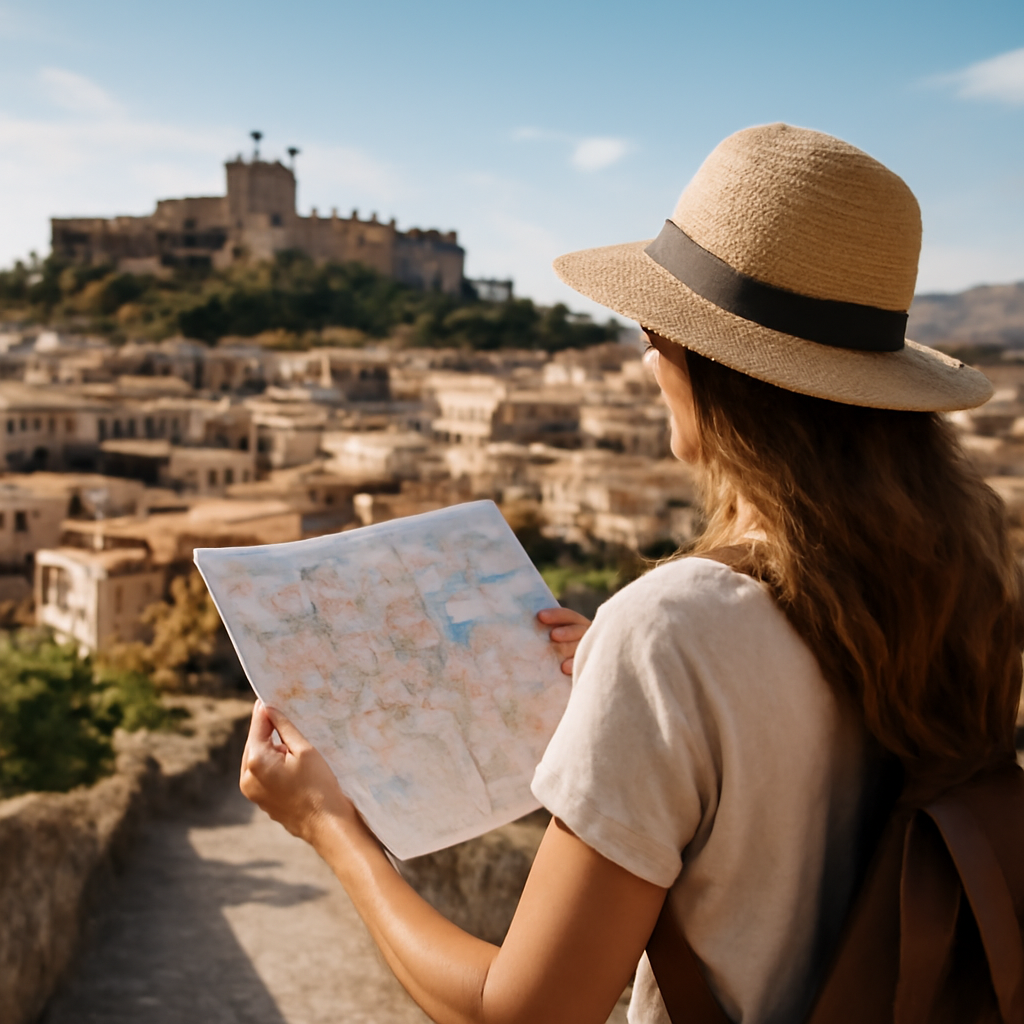
If you feel like weaving meaning, landscape and memory, a good strategy is to alternate heights and corners by the sea, because each elevation offers you a different angle on the same narrative. Start at the castle grounds to get your bearings, continue to a coastal tower to read the coastline as an active border, and end in the historic center to understand the daily life that gave continuity to all of the above. Between journeys, look at the materials of the facades, the courtyards of the manor houses and the place names that still today recall trades, crops and roads; these are details that, when observed calmly, explain as much as a manual of local history.
- Capdepera Castle: go up early or at dusk to avoid heat and groups, and read the access panels to follow the layout of walls and towers.
- Canyamel Tower: compare its defense typology with that of the castle and look for visual alignments towards the coast.
- Historic center: walk through cobblestone streets, the square and the church of Sant Joan Bautista, and stop at the stone houses with arched doorways.
- Cala Mesquida and Canyamel: short excursion to understand why the coves were both a resource and a risk against incursions.
- Craft of the llata: discover how the palm heart was braided into baskets and hats, a craft that defines identity as much as a wall.
To take advantage of the routes, download maps to your phone and take a printed copy with you in case the coverage fails, and use your GPS (Global Positioning System) only as a backup, because in old towns it is more reliable to orient yourself by visible landmarks such as the bell tower or the wall line. If you are staying in the center, you will be able to walk to all these points in a few minutes and you can easily combine heritage walks with breaks in courtyards and squares. And if you also have a rooftop terrace overlooking the castle, this reading of the territory is amplified at dusk, when the stone changes color and the silhouette of the hill explains, almost without words, why the name alludes to a dominant place.
Practical tips for a meaningful visit
A meaningful visit is based on small habits that multiply what you learn and enjoy without leaving a negative mark on the environment, because heritage is, above all, a common heritage. Organize your day in soft light, alternate outdoors and indoors so as not to get saturated, and save space for listening, because local stories complement the panels and guides with irreplaceable nuances. Also, plan brief stops at viewpoints, where a panoramic photograph can serve later as a mental map to sort out everything you have seen.
- Schedules and weather: avoid the central hours of the day in summer and bring water, a hat and shoes with grippy soles.
- Living heritage: respect signs, do not climb walls or collect stones or fossils, and ask permission before photographing people.
- Useful reading: take notes or photos of the panels and contrast terms with local guides, you will notice how the pieces fit together.
- Mobility: if you come by car, consult parking lots near the center and prioritize walking within the historic center.
- Gastronomy: plan a meal with seasonal Mallorcan cuisine, another great way to understand the territory.
If you stay near the hill, you can go in and out of the castle at different times of the day to compare lights, noises and perspectives, a small experiment that changes the perception of the place quite a bit. And when night falls, find a quiet, elevated spot to watch the hamlet settle at the foot of the rock, a scene that anchors the name Capdepera in your memory with surprising clarity. Can you imagine that view from a quiet rooftop, with just the right breeze and the silhouette of the castle at hand?
Where to stay to understand Capdepera from within
There are trips in which the choice of accommodation is not only logistical, but part of the interpretation of the destination, and Capdepera is one of them by the strength of its built heritage. Vila Nova Suites & Spa, a boutique hotel for adults installed in an old manor house that preserves the local character, allows you to inhabit the same matter you have come to admire, with stone, wood and patios that dialogue with the historic streets. From this quiet refuge, you will be just a few steps away from the key places, and you will add wellness services, silence and personalized attention that will help you to slow down your pace, to look more calmly and to remember better what you have experienced.
In addition to its privileged location, Vila Nova Suites & Spa offers a carefully designed experience that combines comfort and authenticity without sacrificing practical details that facilitate the day-to-day life of the discerning traveler. The rooftop terrace overlooking the mountain and Capdepera Castle acts as an open classroom to review your route, the courtyard with pool invites you to cool off after a climb up the hill, and the Honesty Bar lets you close the day with a serene toast. All this, with Wi-Fi (Wireless Fidelity) throughout the building, cozy rooms and a quiet atmosphere where you can listen to the town without superfluous noise.
- Charming Adult Only boutique hotel: undisturbed relaxation and tailor-made service, ideal for couples or solo travelers.
- Historic manor house with local character: architecture and materials that tell the story from the inside.
- Wellness and spa services: muscle recovery after hiking and climbing the castle.
- Rooftop overlooking the mountain and the castle: panoramic view of the territory, perfect for photographs and notes.
- Cozy rooms and quiet courtyard with swimming pool: meditative breaks between visits.
- Free Wi-Fi (Wireless Fidelity) in the entire hotel: maps, reservations and historical documentation.
- Honesty Bar and Chill Out area: relaxed coexistence, without rushing or crowds.
- Parking and amenities nearby: restaurants, golf courses, beaches and nightlife within walking distance.
| Feature of Vila Nova Suites & Spa | Benefit for your trip |
|---|---|
| Roof terrace overlooking the castle | Visual understanding of the relief and memorable pictures without displacement |
| Historic manor house | Immersion in the Mallorcan character without artificial "decorations". |
| Adults only environment | Quiet and leisurely pace for attentive heritage tours |
| Spa and patio with swimming pool | Recovery and wellness between hikes and ascents |
| Wi-Fi (Wireless Fidelity) throughout the hotel | Immediate access to guides, schedules and reservations |
Calendar of events and highlights of the year
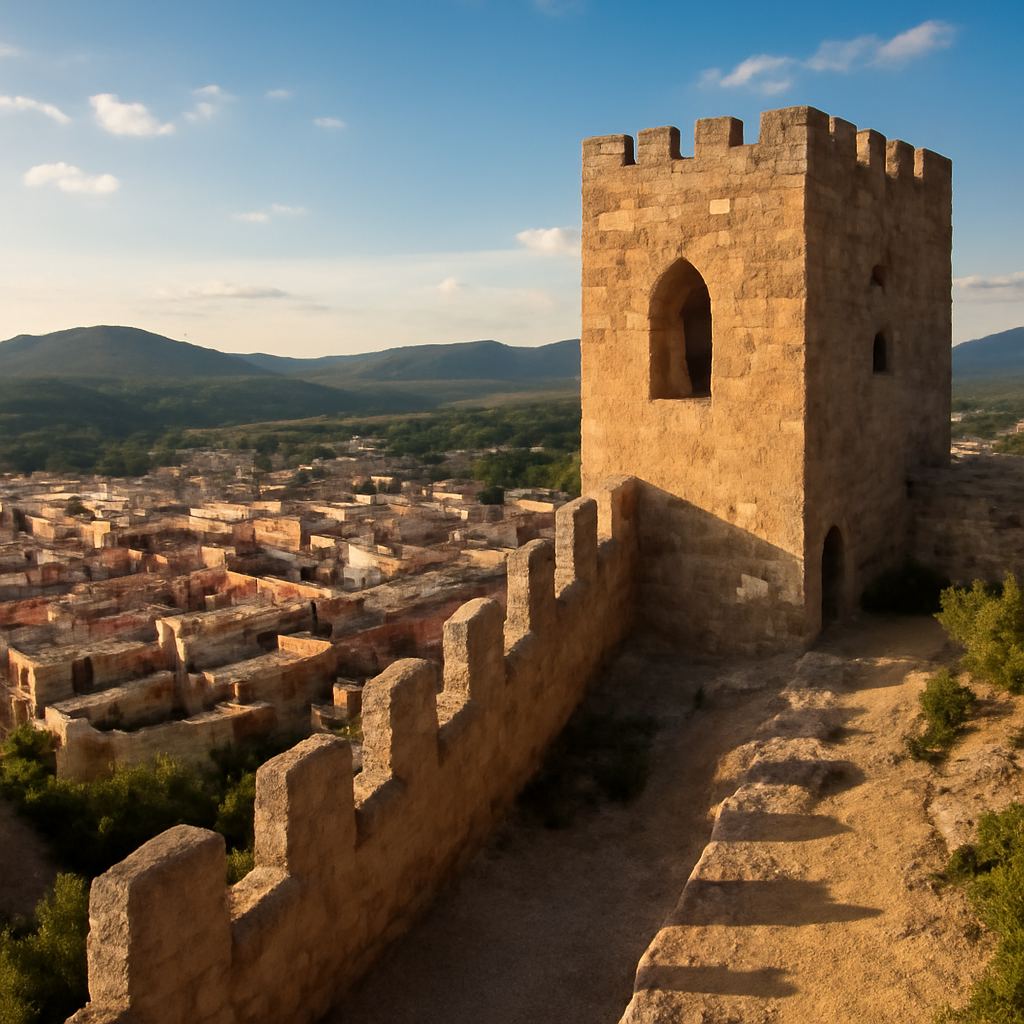
The meaning of Capdepera is also lived in its calendar, because the festivals translate into music, market and social gathering the identity that you discover in stones and landscapes. If you can choose dates, look for spring and autumn, when the weather is kind and the town celebrates its Medieval Market or gastronomic fairs that speak of sea and countryside; they are moments when the streets recover ancient uses and when history ceases to be a text to become a living plot. And as the tourist occupation is spread throughout the year, it is easy to balance lively days with calm mornings in viewpoints and coves.
| Month | Event or environment | Traveler's tip |
|---|---|---|
| May | Capdepera Medieval Market around the castle | Arrive early and climb the wall for views and photos with colorful stalls. |
| June to September | Summer with more life in coves and terraces | Alternating sunrise beaches with sunset castle visits |
| October | Llampuga Fair in Cala Ratjada | Reserve a table and try local recipes that connect sea and tradition. |
| November to March | Quiet environment, clean light for photography | Perfect for leisurely heritage walks and reading in plazas |
Throughout the year, the municipality has several thousand stable residents and receives waves of visitors that vary according to the season, a pattern that, according to the INE (National Statistics Institute), is divided in a marked way between summer months and shoulders of the season. With this dynamic, your ideal strategy is to book in advance in weeks with events, and take advantage of accommodations with good orientation to the hill to have your own viewpoints and avoid unnecessary trips. Thus, each day begins and ends with a panoramic reading of the name that brought you: Capdepera, rock, cape and memory in the same line.
Frequently asked questions and common mistakes when interpreting the name
A common doubt is whether Capdepera literally "means" a fruit, when in fact, beyond the phonetic game, the most supported hypotheses appeal to the geography and the defensive function of the hill. It is also common to interpret the fortress as an ordinary noble castle, when its main value was the control of the territory and the signals to the coast and the channel of Menorca, a surveillance network that justified its dominant position. Finally, there are those who believe that it is enough to go up once to "understand everything", and yet, changing the light, the angle and the social moment of the village multiplies the meaning you extract from the same scenario.
- Don't be left alone with the daytime view: the light of the sunset explains the rock as few hours of the day.
- Ignoring the historic center: the manor houses and squares are the complementary text of the wall.
- Separating sea and hill: local identity unites coves, orchards and coastal defense in the same story.
- Reading without resting: interpretation needs pauses, water and shade to really sink in.
If you recognize yourself in any of these points, think of your next visit as a slower sequence, with more viewpoints and more listening, and consider staying in a place that makes it easier. A quiet courtyard, a rooftop terrace open to the hill and a personal touch make the difference between a scattered chronicle and a memorable story where each scene fits into the next. That, in essence, is the promise that Capdepera holds in its name and in its stone.
Conclusion
Capdepera is better understood when you join name, rock and daily life in the same patient look.
Imagine the next few months discovering new layers with each visit, with the freedom to return to the hill at sunrise or to contemplate it calmly from your own rooftop. What memories and photographs will you want to add when you rediscover the history of Capdepera in your own footsteps?
Additional Resources
Explore these authoritative resources to dive deeper into the history of capdepera.
Explore and Behold Capdepera with Vila Nova Suites & Spa
Rooftop views of the mountains and Capdepera Castle, boutique hospitality for adults and authentic calm for travelers seeking meaning and comfort.